
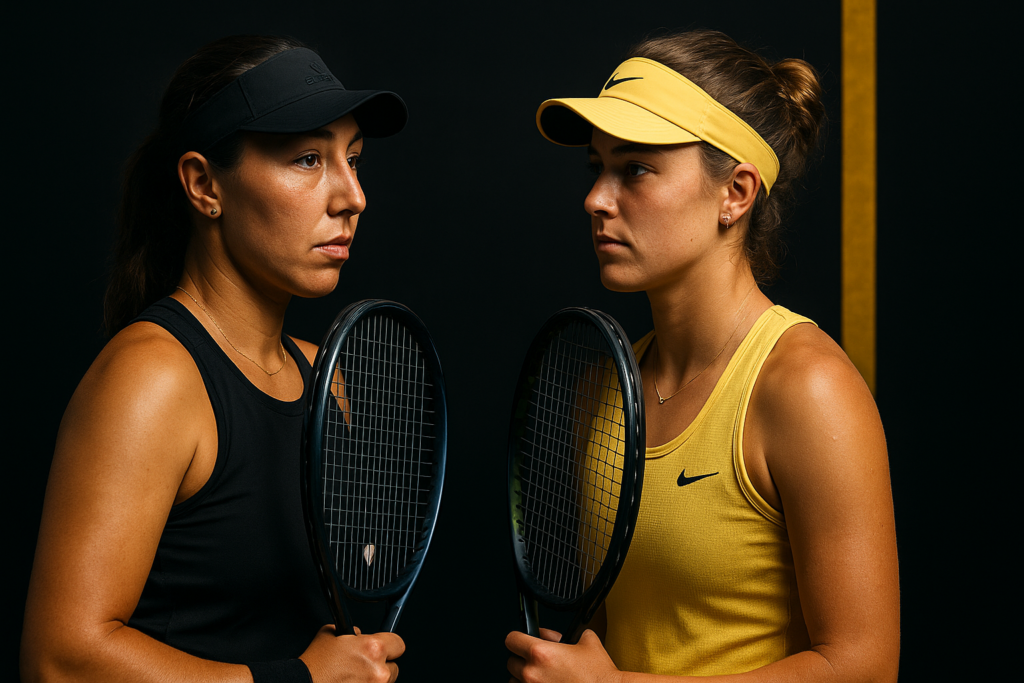
Pegula vs Navarro Prediction — Will Pegula’s 4–0 H2H and 77% Projection Deliver a Straight‑Sets Win at the 2026 US Open?
Estimated reading time: 4 min read
Key takeaways
- Pegula is the clear favorite: 4–0 H2H and models clustered around a 73–80% win probability (US Open tracker ≈77%).
- Navarro’s best chance is serving well, attacking second serves, and forcing long rallies to disrupt Pegula’s rhythm.
- Expect a tight opening set followed by a cleaner second set from Pegula; a 2–1 upset is plausible if Navarro starts hot.
Pegula vs Navarro prediction: on paper this one looks like a closed book.
Jessica Pegula has a 4–0 head‑to‑head lead, models put her around 73–80% to win (the tournament tracker sits at 77%), and the sensible line of thought is she finishes this in two.
The real question isn’t whether Pegula wins — it’s whether Emma Navarro can make this ugly for the favorite and nick a set on Arthur Ashe.
Pegula vs Navarro prediction: why Pegula is favored
Start with the hard facts. Pegula leads the H2H 4–0 and has taken 8 of the 10 sets those matches produced.
That dominance isn’t just Internet bravado; three of those wins came on hard courts, the same surface they’ll play on in New York.
H2H data makes that blunt: Navarro has yet to beat Pegula in tour play.
Season form piles up behind Pegula, too.
One head‑to‑head page lists Pegula at 49–12 for 2026 versus Navarro’s 25–19, a stark contrast in consistency.
Pegula is also sitting at WTA No. 3 while Navarro is in the mid‑20s, which matters in nights like this when tight moments get decided by tournament‑winning experience.
Numbers and models agree.
A few different projections cluster Pegula’s win probability between about 73% and 80%, and the US Open tracker itself shows Pegula at roughly 77% to get through.
Tournament tracking and independent models both wave the same flag: Pegula is the favorite.
How Navarro can force a third set
Okay — now for the fun bit.
Navarro’s path to stealing a set is obvious in concept, less so in execution: serve well, attack Pegula’s second serves, and force long, physical rallies that test Pegula’s patience and movement.
Navarro’s game is built on a steady baseline rhythm and elite court coverage.
Previews that back this up point out she can make matches long and uncomfortable, especially if she hits with depth and gets early returns in play.
Preview pieces have said as much — Navarro’s biggest chance is finding rhythm early and not letting Pegula impose a flat, early‑point style.
Look to the tape.
Navarro has taken sets off Pegula before — Beijing and Bad Homburg both saw Navarro win frames — so this isn’t hypothetical.
The match where Pegula finally closed out in three shows Navarro’s capacity to trouble her when the underdog serves well and pummels Pegula’s second‑serve opportunities.
H2H match notes remind you that Navarro can hang in there.
Match‑up breakdown: serves, returns, and the hard‑court edge
Pegula’s first serve and serving efficiency are the decisive edges here.
Betting previews and analytic write‑ups highlight that her stronger first‑serve percentage and cleaner baseline aggression let her take time away from Navarro.
A reliable first serve reduces Navarro’s chances to attack and limits extended rallies, the exact environment Navarro needs.
Serves and style write‑ups make that point.
The recent Cincinnati meeting is a handy practical example.
Pegula beat Navarro 7–5, 6–2 there, showing she can absorb Navarro’s early pressure and still close out the tighter moments of a set.
That scoreline tells you Pegula can neutralize Navarro’s rhythm and then apply heat when it matters.
Cincinnati result shows how the match flow might look.
So the tactical snapshot is simple:
- Pegula lands first serves and stays compact off the wings → she controls court position and shortens points.
- Navarro clips returns, gets free points off second serves and drags Pegula into long exchanges → she raises the upset probability.
What the experts and models say
Consensus leans Pegula, but there’s nuance.
The US Open’s own preview comes out flat: “Pegula def. Navarro in two sets,” highlighting ranking and prior meetings as the core rationale.
US Open prediction lands firmly on a straight‑sets result.
Data models nudge around the same spot but differ on margins.
Dimers gives Pegula about an 80% chance to win and a 75% chance to take the first set, and favors Pegula on games props like -4.5.
Dimers model leans toward a controlled Pegula win.
Another model (from PredixSport’s Cincinnati preview) sits at 73.48% for Pegula with a projected total games around 20.6 — basically expecting one competitive set and one cleaner set from the favorite.
PredixSport numbers line up with the straight‑sets narrative but allow a tight opener.
Not every pundit wants two‑setter certainty.
A DraftKings editorial flagged Pegula to win but picked a 2–1 score at a value price, betting on Navarro’s ability to push.
DraftKings preview explicitly left the three‑set door open as a profitable expectation for bettors who think Navarro will be tough.
Market odds reflect the gap but not total blowout: around Pegula -417 and Navarro +310 converts to implied chances of roughly 81% and 24%.
Odds roundup shows how books price the match.
On‑court scenarios: the moments that decide this match
Early break or tight opening set
If Navarro gets an early break, Pegula will be forced into offense sooner than she wants and the match can tilt toward a longer contest.
Navarro’s best route to that break is high first‑serve return aggression and making Pegula play deep, neutralizing that flat, early‑point risk Pegula loves.
Middle‑set swing
If the first set goes toe‑to‑toe and Navarro snatches it, the pressure in set two shifts to Pegula to reset.
Historically, that’s where Pegula’s experience shows: she’s converted breaks and closed tight sets in their previous meetings.
Expect Pegula to tighten the strings and take more calculated risks if she drops set one.
Late‑match attrition
Long rallies favor Navarro if Pegula’s timing falters, but they also physically tax Navarro.
She’s the younger grinder, yes, but not dramatically fresher given her 25–19 season and the energy drain from long matches earlier in the tournament.
With no reported injuries to either player, fitness will be a factor but not a deciding one.
US Open previews noted both players seemed healthy heading in.
Prediction summary — short, sensible, and specific
Result prediction: Jessica Pegula to win, most likely in straight sets.
That’s the common expert call and what the models cluster around: a 73–80% win probability for Pegula and a tournament tracker number of about 77% in her favor.
Alternate outcome: Pegula in three sets is plausible and probably the best single contrarian take for anyone who expects Navarro to serve superbly and drag Pegula into long baseline wars.
Several pundits and a few betting previews have flagged that exact 2–1 scenario as realistic value.
Panel picks split on that nuance.
Bottom line: things on paper and on the models point to a straight‑sets Pegula win, but if you’re tuning in for drama, watch the opening set and the early returns — that’s when Navarro’s best shot shows itself.
Responsible gambling note: if you’re considering wagers, treat markets as entertainment; bet only with what you can afford to lose.
Conclusion — the one thing to remember
Pegula vs Navarro prediction: Pegula is the logical favorite — 4–0 H2H, top‑3 form, and a 77% tournament‑tracker chance — but Navarro’s game profile gives her a real shot at one set if she serves well and turns points into long, physical rallies.
Expect Pegula to advance; expect Navarro to fight for every inch.
Frequently Asked Questions
What’s your Pegula vs Navarro prediction?
Short answer: Pegula to win, most likely in straight sets. Models and the tournament tracker put her around 77% to advance, and head‑to‑head is 4–0 in Pegula’s favor.
Can Navarro realistically win a set?
Yes. She’s taken sets from Pegula before and her best route is serving well and attacking second serves. If she manages that early, she can absolutely nick a set.
Are there any injury concerns that change the prediction?
No. Major previews and models don’t flag new injuries for either player, so this looks like a pure tactical and form matchup. Tournament preview mentions both players appear healthy.
How much should odds influence my pick?
Odds reflect market wisdom and money flow — Pegula’s around -417 implies heavy favoritism. If you like the match as a competitive spectacle rather than a betting opportunity, the numbers just confirm the expected outcome.
If you’re betting, remember value matters more than the favorite’s name; one sensible alternative is a Pegula 2–1 pick priced attractively by some books.
What’s the most likely scoreline?
Expect something like 6‑4, 6‑3 or 7‑5, 6‑2 — a tight opener followed by a clearer second set, which matches model projections for around 20–22 total games.
PredixSport’s projection gives a similar games total.