
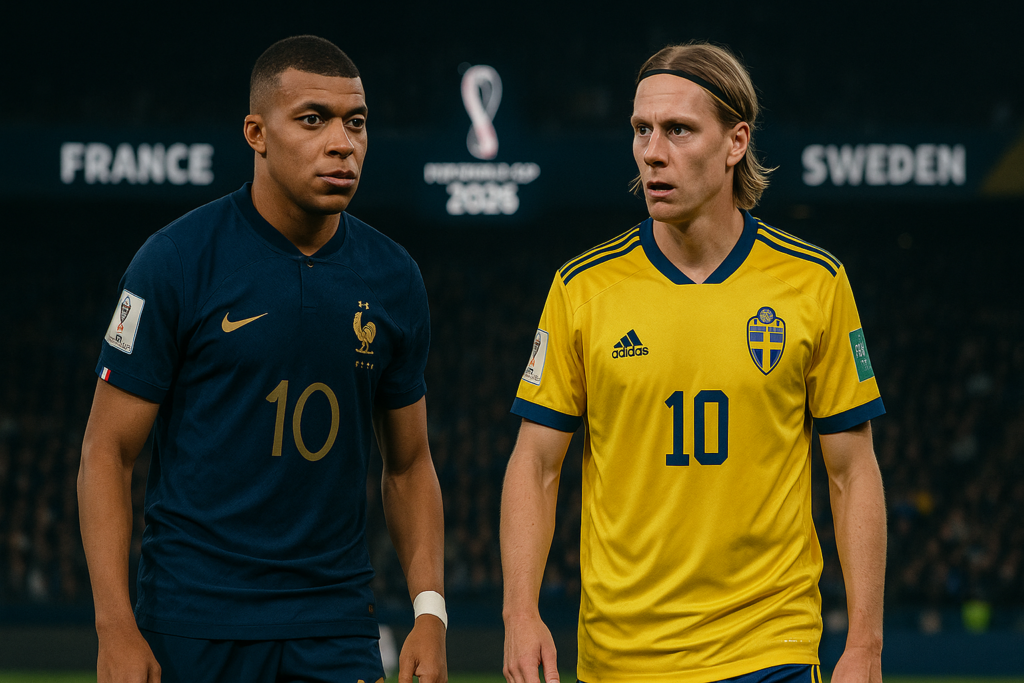
France vs Sweden — World Cup 2026 Round of 32: what to expect, who matters, and the betting angles
If you’re reading this the day before kick-off, here’s the essential bit: this isn’t just another knockout tie. It’s France — heavy favourites on paper — against a Sweden side that’s built to frustrate and punish you on the break. The match kicks off on 30 June 2026 at 21:00 GMT / 5:00 p.m. ET at MetLife Stadium in East Rutherford, New Jersey, and it’s the first time these countries meet at a World Cup. That historical little nugget matters because it adds a rare fresh subplot to an otherwise familiar matchup. (Yes, France vs Sweden has been played before — but not at the World Cup.)
Broadcast wise, you can find it on major networks: ESPN’s preview lists coverage on ITV1, Fox Sports, Zee5 and SBS with live updates on ESPN. If you want a background read, Goal’s detailed preview is useful; FIFA’s feature is excellent for the historical angle and context.
How both teams arrive: form, numbers and the first impressions
France walk into this one with momentum. They won all three group games — beating Senegal 3-1, Iraq 3-0 and Norway 4-1 — scoring 10 goals and conceding just 2. That level of attacking output and defensive stability is normally a championship-calibre combination. Goal’s preview also notes France have won four of their last five matches and haven’t lost since a pre-tournament friendly loss to Ivory Coast.
Sweden’s route has been bumpier. They advanced as one of the better third-placed sides, finishing behind the Netherlands and Japan in a tricky group. Their last five matches are a microcosm of that instability: 10 goals scored and 10 conceded, per Goal. In short, Sweden have the firepower to hurt you but also a tendency to leave space behind.
Here’s the interesting part: on paper and in form, France look the safer long-term bet. But knockout football compresses variance. One heavy challenge or a single moment of individual brilliance — or error — can change everything. That’s where Sweden’s counter-attacking profile becomes dangerous.
Tactical themes and predicted XIs
ESPN’s predicted line-ups paint a clear picture of how both coaches might set up. For France the expected XI is built around a settled spine:
- Goalkeeper: Mike Maignan
- Back four: Jules Koundé, Dayot Upamecano, William Saliba, Theo Hernández
- Midfield: Aurélien Tchouaméni and Adrien Rabiot
- Attack: Michael Olise, Ousmane Dembélé, Désiré Doué and Kylian Mbappé
Sweden’s predicted XI (again ESPN) looks like this:
- Goalkeeper: Jacob Widell Zetterström
- Defence: Gustaf Lagerbielke, Victor Lindelöf, Hjalmar Ekdal
- Attack: Anthony Elanga, Viktor Gyökeres, Alexander Isak
What does that mean on the pitch? France’s strength is control — technically comfortable midfielders, full-backs who can drive forward, and depth in attack to rotate pace and creativity. Sweden are more direct: compact defensive blocks at times, but quick in transition with Isak and Gyökeres up front and Elanga offering wing thrust.
France’s likely blueprint
Expect France to try to manage possession without turning static. They have the defensive personnel to sit relatively high and suffocate counter-attacks, with Koundé and Saliba offering ball-playing ability. Tchouaméni and Rabiot can screen and recycle possession. This matters because France’s group form showed they can outscore opponents while not offering many openings — 10 goals for and only 2 conceded is the cleanest summary.
Sweden’s route: compact, clinical, and opportunistic
Sweden’s best route is simple: stay compact, limit France’s chances, and then use pace and movement to punish them on the break. Their front three (Isak, Gyökeres, Elanga) are good at isolating defenders and converting chances in transition — the problem is they have been conceding as much as they score lately. That volatility gives them the ceiling to upset France but also the floor that makes them vulnerable to being overrun.
Key players and matchups to watch
Every big knockout has matchups that will decide it. Here are the ones I’d underline.
- Kylian Mbappé (France): If you need a one-line summary — form and finishing. CBS’s preview emphasised Mbappé’s goal-scoring form as a major factor. When he’s on, France can blow teams apart quickly.
- Alexander Isak & Viktor Gyökeres (Sweden): Two forwards who do different damage. Isak links play and stretches backlines; Gyökeres is a more direct penalty-box predator. Between them Sweden have the threats to punish slow transitions.
- Aurélien Tchouaméni vs Sweden transitions: Tchoua is the player France rely on to break up counters and carry the ball out of danger. His positional discipline will be key.
- Full-back battles: Theo Hernández pushing high gives France width, but if Sweden overload the channels with Elanga and overlapping runs, that could create moments of imbalance.
This game is as much about individual moments as systematic control. If Mbappé is isolated with space, you bet he’ll make the most of it. If Sweden get numbers in transition, they’ll make life miserable for France’s back line.
Head-to-head and historical context
Here’s a fun fact: per FIFA, this is the first time France and Sweden meet at the World Cup — “a match 96 years in the making.” That headline makes it a neat historical footnote and gives both teams a fresh narrative in front of the global audience.
Recent meetings are more mundane. They played in the 2020 Nations League where France won 4-2 in November, while Sweden had beaten France 1-0 earlier that year in Stockholm. Across the last five meetings, Goal’s recap shows France have won three while Sweden won one, and France also claimed a 2014 friendly. In qualifying years the sides traded home wins in 2016 and 2017, which underlines the point: home advantage and small tactical tweaks have flipped outcomes before.
Betting angles and the market read — what to consider
I’ll be candid: the market has France as the clear favourite. CBS Sports HQ’s preview calls them “heavy favorites,” and that’s the prevailing line across outlets. But there’s nuance. Knockout ties inflate variance, which creates places where the market can misprice risk — especially around goals, counters, and in-play swings.
This matters because your betting approach should match the way football actually plays out: control and predictive form matter for pre-match markets, but in-play resilience and game state matter just as much for live wagers.
Pre-match ideas (responsibly)
- Match winner: Backing France to win is the straightforward, low-variance play given current form. That’s what the market expects.
- Both teams to score (BTTS): Sweden’s propensity to both score and concede makes BTTS an appealing angle if the price is sensible. Their last five matches produced 10 goals scored and 10 conceded — that’s volatility you can exploit.
- Totals market: France’s scoring form suggests a higher total could land, but Sweden’s defensive lapses also push toward “over” lines. If the market is overconfident in France keeping a clean sheet, there’s value in totals or BTTS.
- Player props: Anytime scorer markets for Mbappé, Isak or Gyökeres are natural favorites of punters. Just be mindful of starting-line confirmations before staking.
Important caveat: none of the current sources give exact lines or odds movements, so avoid committing to a fixed number until you check a live market. Odds shift a lot in the run-up to kick-off and can swing heavily based on confirmed starting XIs and injury news. Always look up a live feed on your preferred sportsbook before placing money.
In-play and niche angles
In-play is where this tie could be especially interesting. If France take an early lead and sit deeper, Sweden’s counter-threat makes them a good live handicap candidate. Conversely, if Sweden hold and pin France back, a live bet on a France comeback (or late winner) might offer decent value.
Market reactions will be driven by small details: a late injury to a French full-back, a red card, or a tactical tweak that opens the game. Those are the moments where odds can swing fast and where disciplined, small-stakes in-play trades often do best.
Responsible gambling note: only bet what you can afford to lose, treat betting as entertainment, set a stake limit, and don’t chase losses. If you want further help building a small, diversified betting plan for this game I can sketch one — but it’ll include conservative sizing and explicit risk flags.
Risk flags and what could flip the script
No preview is complete without naming the things that could ruin your preconceptions.
- Injury uncertainty: The sources available do not provide a late fitness bulletin. Any unexpected absence — especially in France’s defence or Sweden’s front three — would change the balance materially.
- Complacency and knockout variance: France’s status as favourites can invite two things: a confidence that dulls edge, or the opposite — a team so clinical they finish the job early. Knockout games are notoriously hard to predict.
- Refereeing and red cards: One card or one penalty can swing a 1-goal game into a rout. Sweden’s physical approach at times can invite cards; France’s creative players can draw penalties.
- Weather and pitch: MetLife Stadium conditions, travel and rotation could subtly affect stamina and pressing intensity late in the game.
All of these are normal in cup football, but they’re worth flagging if you’re thinking about higher stakes.
Resources and further reading
- Goal’s France vs Sweden World Cup preview — good tactical and statistical summary.
- ESPN’s match preview and predicted line-ups — useful for broadcast info and likely XIs.
- FIFA’s feature on the first World Cup meeting — context and history.
- CBS Sports HQ preview video — a short, opinionated market and player angle discussion.
- FIFA training clip — France — to get a feel for how the squad prepared.
- The Athletic’s live match hub (NYT) — box score and live updates during match day.
FAQ
When and where is France vs Sweden being played?
The match takes place on 30 June 2026 at MetLife Stadium in East Rutherford, New Jersey. Kick-off is 21:00 GMT / 5:00 p.m. ET.
Where can I watch the match live?
Broadcasts include ITV1 in the UK, Fox Sports in the U.S., Zee5 in India, and SBS in Australia, with live updates available through ESPN’s platforms. Check local listings in your country for exact channels and streaming windows; ESPN’s preview has a useful round-up.
Who are the likely starters for both teams?
Predicted XIs from ESPN put Mike Maignan in goal for France with a back four of Koundé, Upamecano, Saliba and Theo Hernández; Tchouaméni and Rabiot in midfield; and Olise, Dembélé, Doué supporting Mbappé. Sweden’s predicted XI includes Jacob Widell Zetterström in goal, a backline including Victor Lindelöf, and an attack led by Anthony Elanga, Viktor Gyökeres and Alexander Isak. Treat these as educated projections; wait for the official team sheet before placing bets reliant on starters.
Which team is the favourite and why?
France are the clear favourites, backed by dominant group-stage performances (10 goals scored, 2 conceded) and deeper squad quality. CBS’s coverage describes them as “heavy favorites.” But favourites aren’t invincible — Sweden’s counter-attacking threat and knockout unpredictability mean the match isn’t a foregone conclusion.
Are there any injuries I should know about?
At the time of the available previews there isn’t a confirmed late fitness bulletin for either side. The training clips and press coverage don’t provide definitive absence lists. Always check the official team sheets and reliable live sources (team press conferences, federation sites) close to kick-off for final injury updates.
What’s a sensible betting approach for this tie?
Match-winner markets favour France, which is the lower-variance, safer play. If you’re looking for more value, consider goals markets (totals or BTTS) given Sweden’s recent tendency to both score and concede. Live markets could be attractive for in-play hedging if the match state shifts (early goal, red card, tactical changes). Remember to stake responsibly and avoid chasing losses.
Will historical meetings help predict the outcome?
They provide color but limited predictive power. France have the edge in recent meetings (including a 4-2 Nations League win in 2020), but World Cup context is unique. FIFA notes this is the first World Cup meeting, which injects a little extra novelty into the psychological layer.
Where can I find in-depth live updates or advanced stats during the match?
Live hubs like The Athletic’s match page (NYT) and official FIFA match centres offer box scores and minute-by-minute updates. For advanced stats, post-match and during-play trackers on ESPN and Opta-powered feeds will be most useful.
Is there anything to watch for in the first 20 minutes?
Yes: how France’s full-backs behave, whether Sweden sit ultra-deep or press high, and whether Mbappé gets involved early. An early goal will change the dynamic — France are likely to close down the game if they lead, while Sweden will become more open if chasing.
Conclusion — the key takeaway
If you only remember one thing before kick-off: France are the favourites and have the depth and recent form to justify that tag, but Sweden’s counter-attacking profile and recent volatility make them a legitimate danger in a one-off knockout. This matters because it creates realistic betting and tactical scenarios where conservative choices (backing France) coexist with smart value plays (goals markets, in-play trades).
Check starter confirmations and injury updates close to kick-off, keep stakes sensible, and be ready to pivot if the match state changes. If you want a compact, publication-ready betting dossier for this game — with best bets, a model-style lean, market reads and clear risk flags — tell me your preferred stake size and tolerance and I’ll draft one.