
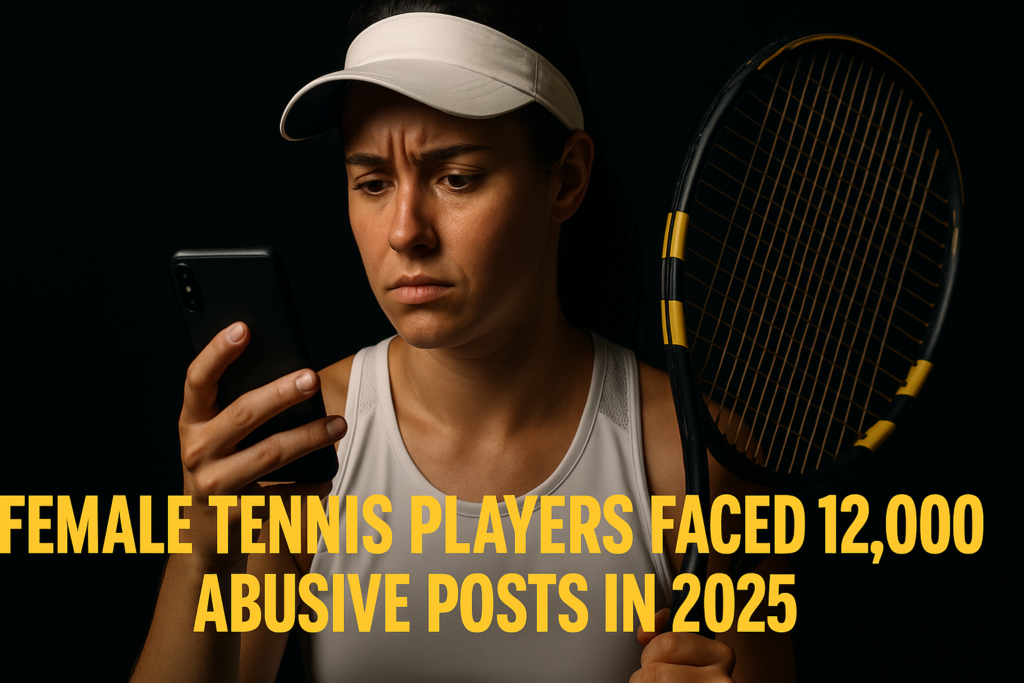
12,000+ abusive posts in 2025 — why women's tennis still fights a battle off the court
Here's the blunt headline: female players in 2025 were targeted with more than 12,000 abusive social posts and messages, according to a WTA/World Tennis report that monitored more than 1.2 million items across the year. WTA/World Tennis report — and the numbers are worth paying attention to, not just for the stats nerds but for anyone who cares about the people who sprint, slide and stand in the spotlight.
What the data actually says
The monitoring program — Signify Group’s AI-driven “Threat Matrix” — looked at over 1.2 million posts and comments in 2025 and flagged more than 12,000 as abusive.
Of those, 3,726 were put into the “serious abuse” bucket: violent, sexual, racist, or targeted threats. The report also notes platforms removed around 66% of that serious abuse.
Numbers alone don't tell the whole story, but they do give you scale. Thousands of messages like that is not an abstract problem; it’s a steady background roar that follows players around.
Where the abuse is coming from
The WTA and subsequent reporting make a clear point: a big slice of the abuse is tied to frustration from gamblers.
The 2025 report found gamblers were behind 42% of verified abuse and a staggering 59% of what the report classed as serious abuse.
That’s broadly consistent with other coverage — the BBC’s earlier look at the problem showed gamblers were responsible for about 48% of abusive posts in the 2024 dataset. BBC reporting makes this link obvious: when money and emotions mix, players become targets.
Why gambling-related anger is so toxic
- People who lose money can be irrational and vindictive; social media gives them direct access to athletes.
- Betting markets can turn a single withdrawal, retirement or even an unexpected loss into a flashpoint.
- Because of anonymity and scale, abuse from gambling-related accounts can be coordinated or repeated fast.
That doesn't excuse the behaviour. It explains patterns. And patterns matter when you're trying to build safety measures.
Platforms, removals and the law
Progress is visible, but patchy.
The report says platforms removed 66% of serious abuse, which is better than nothing — but leaves thousands of harmful posts still visible or circulating.
When cases cross legal lines
The WTA said law enforcement was notified about 35 accounts linked to 12 individuals in 2025.
The BBC’s follow-up reporting added that 15 accounts were judged to have crossed legal boundaries and were referred to national police agencies. BBC follow-up report
Different thresholds, different counts, same bottom line: some posts are moving from “annoying troll” into territory where criminal investigation is appropriate.
Platform enforcement: a mixed picture
- Removal rates show platforms are acting at scale more than they used to.
- But removals aren’t the same as prevention, and deleted posts can be screenshotted and reshared.
- Legal referrals happen, but only for a small fraction of accounts; identification, jurisdiction and evidence hurdles slow things down.
What this does to players
Let’s be clear: this is not just an annoyance. The WTA quoted players saying the abuse is “unacceptable” and that its effects can be “significant.”
That’s backed up in reporting where players speak openly. Jess Pegula — yes, a top player — has described death and family threats as feeling almost “normal.”
That sentence should make you pause. For someone who spends their days practicing, travelling and performing at the highest level, that’s not resilient talk; it’s exhaustion framed as resignation.
Why mental load matters for results
Players who have to scan messages, read threats, or think about safety are carrying attention away from training and match prep.
And it’s never just about one match. The abuse spikes after losses, withdrawals or moments that affect betting lines — those are the same events that already stress athletes physically and mentally.
So what’s being done — and is it enough?
The report and coverage show a few positive moves: more takedowns, some accounts referred to police, and monitoring tools that can spot patterns.
Still, the volume stayed “similar to 2024,” per the WTA findings, so the needle hasn’t moved dramatically.
- Monitoring at scale is better — Signify’s Threat Matrix scanned over 1.2 million items — but detection without prevention leaves the burden on players to cope.
- Platforms are removing a decent chunk of serious content, but removal is reactive and not always fast enough.
- Authorities are being notified in some cases. That’s necessary, but legal processes are slow and limited by jurisdiction.
The bottom line: progress, yes. Fix solved? Not by a long shot.
What would actually help
Short version: faster, smarter platform action; clearer accountability for organised accounts; and concrete support for affected players.
That means three practical areas:
- Prevent: stronger account verification and automated tagging to stop repeat offenders sooner.
- Protect: quicker takedowns plus resources for players to manage threats without becoming their own moderators.
- Pursue: streamlined cooperation between platforms and law enforcement so legal referrals don’t stall indefinitely.
Those are policy-ish ideas, but they matter on the ground. Players aren’t looking for perfect solutions overnight; they need fewer threats, faster clean-up, and real consequences for the worst offenders.
FAQ — what fans actually ask
Q: How big was the problem in 2025?
A: The WTA/World Tennis report found more than 12,000 abusive posts and messages across 2025, with 3,726 classified as serious abuse (violent, sexual, racist, or targeted threats). The monitoring covered over 1.2 million posts and comments.
Q: Are platforms doing anything?
A: Platforms removed about 66% of the serious abuse flagged by the report. That shows action, but removal is reactive and doesn't fully prevent harm.
Q: Is this linked to gambling?
A: Yes. The 2025 analysis attributed 42% of verified abuse and 59% of serious abuse to gamblers. Earlier coverage of 2024 put that figure even higher in some measures. So gambling-related frustration is a clear driver.
Q: Were any offenders referred to police?
A: According to the WTA, law enforcement was notified about 35 accounts linked to 12 individuals. BBC reporting said 15 accounts crossed legal thresholds and were referred to national police agencies. The two tallies reflect different stages and definitions, but both show legal action is being used in some cases.
Q: How are players coping?
A: Players and the WTA describe the abuse as unacceptable and significant in effect. Some, like Jess Pegula, have said extreme threats started to feel “normal,” which is a stark indication of accumulated harm.
Q: Should fans be worried about match outcomes or betting swings?
A: Fans shouldn’t be pressured by the noise. The link between betting frustration and abuse is real, but the core issue is player safety and welfare, not markets. If you bet, do so responsibly — and don’t use a player’s performance as a license for abuse.
Why this matters beyond the headlines
Tennis is a sport where the athlete's body and mind are both instruments of performance.
When thousands of abusive messages exist in the ecosystem, it affects not just wellbeing but fairness; a player under sustained online attack is not operating on an even playing field.
We’ve seen incremental improvements in platform responses and legal referrals. The WTA’s report shows that monitoring and takedowns are happening. WTA/World Tennis report makes that plain.
But monitoring 1.2 million posts and removing two-thirds of the worst stuff is still a partial fix. The social media ecosystem moves faster than systems designed to police it.
Quick note on sources
This piece leans on the WTA/World Tennis report and follow-up BBC reporting that highlighted the gambling connection and players’ experiences. For details on police referrals and personal accounts, see the BBC’s coverage. BBC reporting and BBC follow-up report.
Conclusion — the one thing to remember
Yes, there’s progress: more detection, more removals, and some legal referrals. But tens of thousands of harmful posts remain a lived reality for players.
If you care about the sport — and the people who make it worth watching — the sensible takeaway is simple: demand faster platform action, support players as people, and refuse to accept online abuse as part of the package.